
How did they find us?
Analytics reports can show whether a visit came from search, an ad or another website.
A customer finds her business. An appointment comes in. Then a wiretapping claim about her website’s technology becomes another job to handle.
Supporting the Halt Abusive Internet Lawsuits Act of 2026.
 The website she needed 60 seconds
The proposal: a commercial-purpose bar on covered wiretapping and related claims and enforcement. Scope and privacy remedies.
A real owner’s account
Tami Goldsmith helped run a new heating-and-air business. Its website used a booking service. When a summons arrived, she had a technology dispute to understand as well.
Folsom Lake Heating & Air · Reported by CapRadio, June 18, 2026. The settlement amount and payer were not disclosed.
“We’re not IT people. It’s totally out of our spectrum of things that we know about.”
Tami Goldsmith, speaking to CapRadio
One owner’s experience with an unfamiliar legal problem.
Read her account and sourceWhy reform matters
A business can incur legal fees before a court tests a claim. When defending is expected to cost more than the proposed settlement, paying can seem like the only affordable choice. That is the pressure this coalition wants Congress to address.
One owner described a $15,000 settlement option alongside an estimated $20,000 cost to contest the claim. Later reporting says she intends to defend her business. Read the dated account.
Those figures were alternatives, not verified payments. A settlement or a high defense cost alone does not establish that a claim is abusive.
A business wants to know how people find it, which services interest them and whether its website is useful. Different tools help with different jobs.
Analytics reports can show whether a visit came from search, an ad or another website.
Page-view events help an owner understand which services visitors explore.
A separate booking service receives the request. Analytics can count a configured completion event.
These functions can send information to outside providers. Data, recipients, settings and consent matter to the legal question.
Try the simple demonstrationFollow one visit in 42 secondsH.R. 10263 · The HAIL Act
We believe ordinary website operations need a predictable legal framework. Owners should not have to work through surveillance-law disputes one demand letter at a time.
The bill proposes a federal commercial-purpose boundary for the laws it covers. That choice—and its reach—deserves a clear explanation.
Covered wiretapping, pen-register, trap-and-trace and eavesdropping claims and enforcement would be barred for commercial-purpose data practices.
The proposal reaches beyond small businesses and claims without harm. It also addresses pending proceedings and has no express actual-harm exception.
Our policy position is separate from the statutory summary. Read the introduced text. Official status checked September 25, 2026.
Explore the national picture
Fisher Phillips’ interactive Digital Wiretapping Litigation Map lets you explore its records by state, industry and court type.
The heat map shows the distribution of tracked cases. It does not classify which claims are abusive or count unique small businesses.
Open the interactive heat mapExternal resource · Fisher Phillips
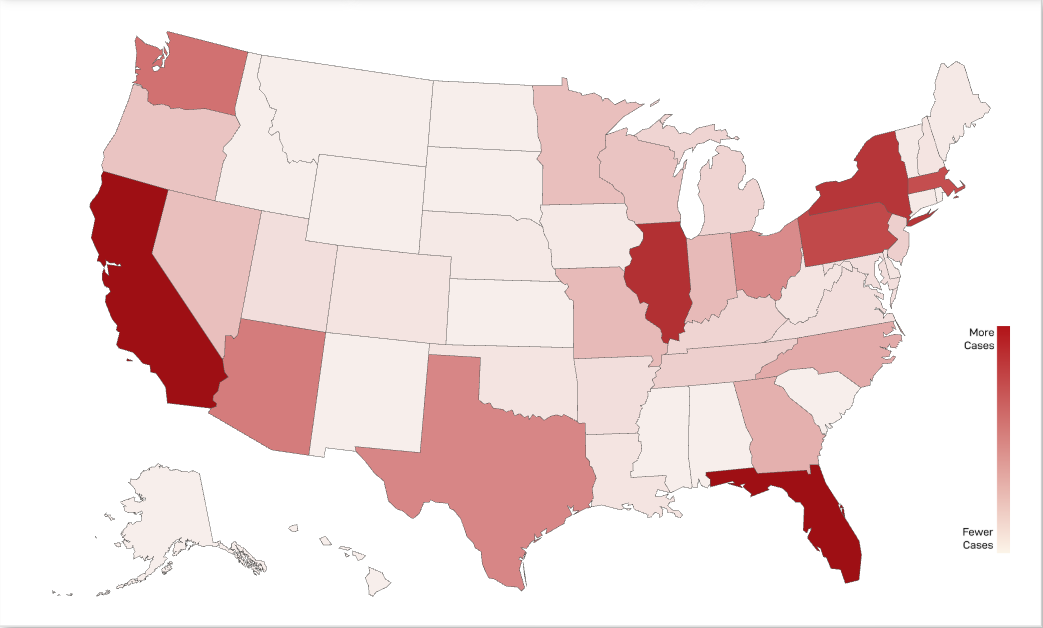 Explore the interactive map at Fisher Phillips
Public positions
Meet the organizations and businesses in the coalition, and read published positions on website-litigation reform. Each statement identifies the proposal it addresses.
Related reform advocacy is not presented as an endorsement of H.R. 10263.
Meet the coalitionNo. A product name does not settle the legal question. Claims depend on the configuration, data, recipients, consent and legal theory. See what the court records establish.
HAIL contains no express exception for actual harm when its commercial-purpose bar covers a claim. Other possible remedies depend on their own requirements. Read the explanation of legal remedies.
It addresses a narrower civil-action route for certain online pen-register allegations. Its checked status and HAIL’s broader reach are explained in our side-by-side comparison.
A one-page overview and a supporting packet, ready to read or forward.